Insurance for short-term rental hosts: homeowners, host protection, endorsements, and STR policies
Renting out a spare room, a basement suite, or your whole home on a booking platform changes your insurance picture more than most hosts realize. Standard homeowners policies are written for a home you live in, not one that strangers pay to stay in. Most contain some form of business exclusion, and the platform's host protection program isn't the same thing as insurance.
This guide sorts six common hosting losses by which coverage usually responds, compares the cost of a home-sharing endorsement with a dedicated short-term rental policy, and looks at the part hosts often overlook: lost booking income after a fire.

The four kinds of coverage
Standard homeowners policy. Covers your home and belongings and your personal liability. Many policies exclude or limit coverage when the home is used to earn rental income, especially for liability claims from guests and for damage guests cause. Occasional rentals are sometimes tolerated. Frequent rentals usually aren't.
Platform host protection. Booking platforms offer damage and liability programs for hosts. These can be useful, but they're not a replacement for insurance. They often come with conditions, exclusions, claim deadlines, and in some cases they pay only after your own insurance.
Home-sharing endorsement. Many insurers offer an endorsement that adds back coverage for occasional hosting: guest liability, guest damage, and sometimes theft by guests. They're usually limited to a primary residence and a maximum number of nights or a maximum amount of rental income.
Short-term rental policy. A policy written for a property that's rented regularly, often closer to a landlord or small business policy. It typically covers guest liability, guest damage, and lost rental income.
Six losses, four coverages
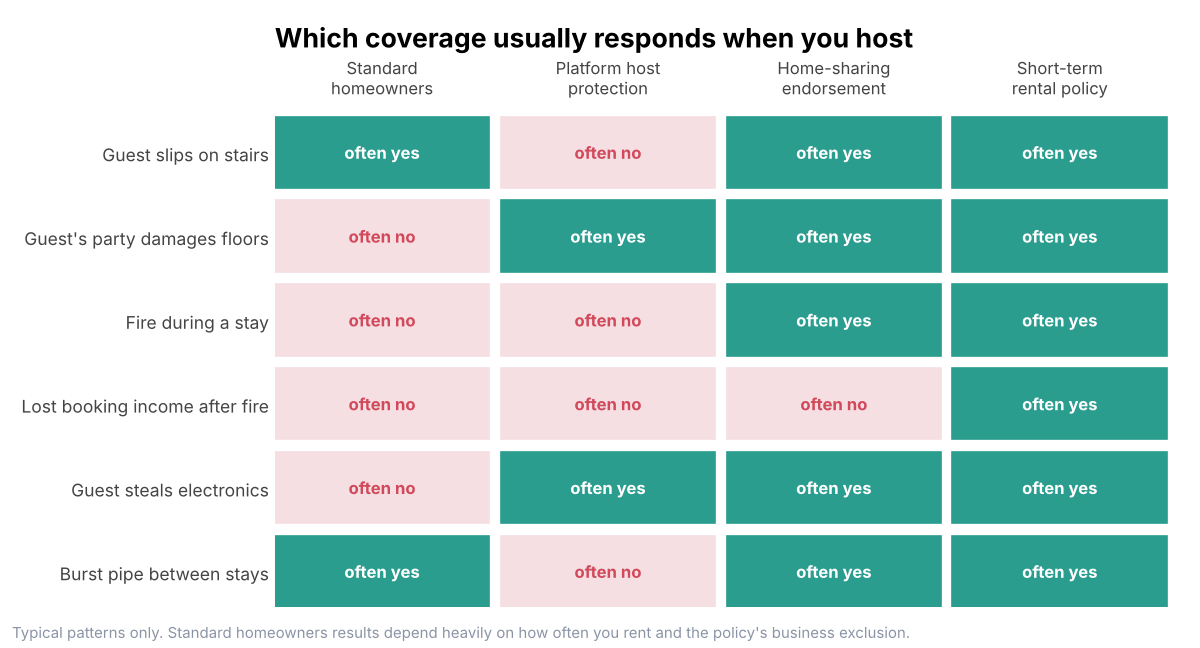
| Loss | Why it's tricky |
|---|---|
| Guest slips on the stairs | Liability claims from paying guests are a common homeowners exclusion |
| Guest's party damages floors | Damage by guests may be treated as excluded wear or intentional damage |
| Fire during a stay | Usually covered on the building, but the hosting may complicate the claim if undisclosed |
| Lost booking income after a fire | Not covered by homeowners at all |
| Guest steals electronics | Theft by people you invite is limited or excluded on many policies |
| Burst pipe between stays | Normally covered, unless the home is vacant for long stretches |
What it costs
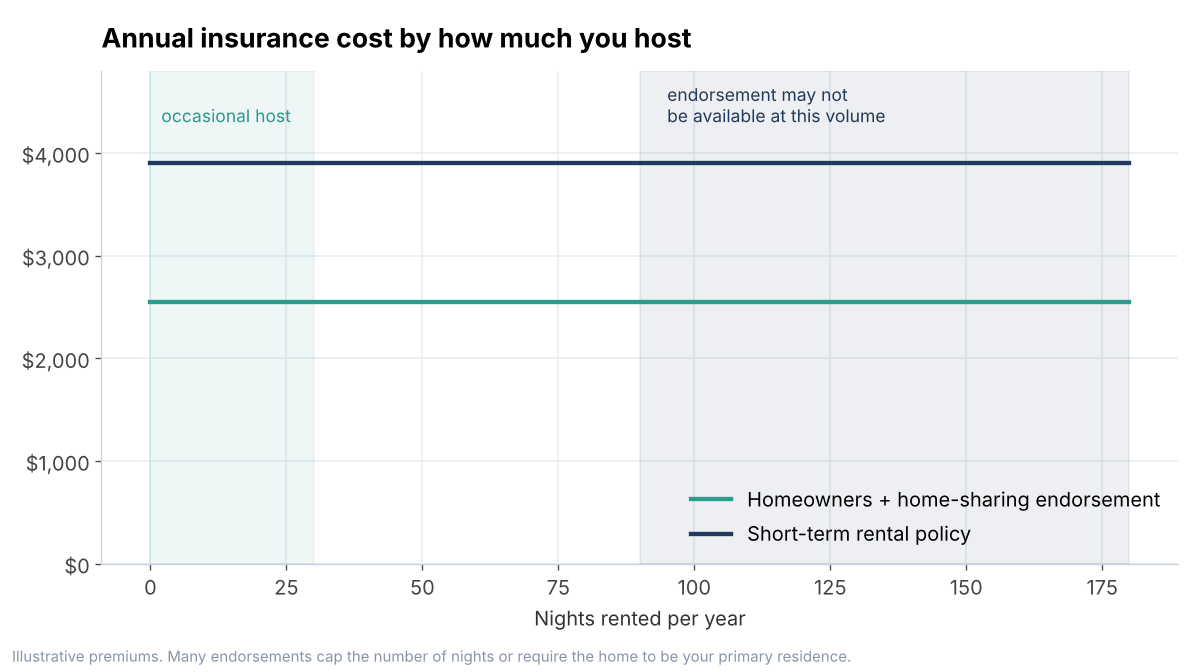
The endorsement makes sense for occasional hosting of a primary residence. A whole-home rental that's booked much of the year, or a property you don't live in, generally needs a short-term rental policy. Tell your insurer how many nights you rent and whether you live there. Undisclosed hosting is one of the most common reasons claims are denied.
The income side
Hosts often think about the building and forget the income. If a fire puts the property out of service for nine months, the bookings stop too.
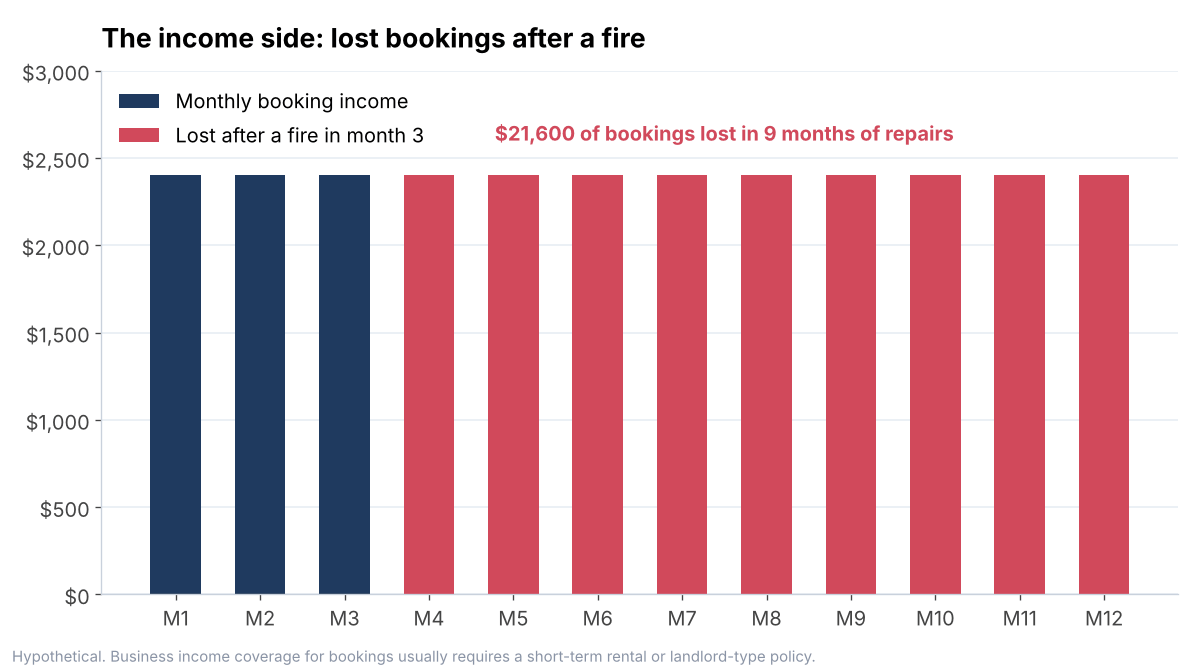
Short-term rental and landlord-type policies often include business income or fair rental value coverage that pays lost bookings during repairs. Check how it's calculated, usually from your booking history, and keep records that show it.

Two hosts, two answers
A homeowner who rents a spare room about 20 nights a year while living there. A home-sharing endorsement is usually the right fit. It's cheap, it fills the liability and guest-damage gaps, and the hosting is clearly secondary to living in the home. Disclose the hosting, keep the endorsement's night limit in mind, and add an umbrella if you have significant assets.
An owner who bought a cottage to rent on a booking platform most of the year. This is a rental business. A short-term rental policy, or a landlord-type policy written for nightly rentals, is the right fit. Look for guest liability, damage by guests, theft, and lost booking income. A homeowners policy, with or without an endorsement, usually won't fit a property the owner doesn't live in.
Liability: the large exposure
Most hosting claims are small: a broken lamp, a stained carpet. The claim that matters is a serious injury: a fall down unfamiliar stairs, a hot tub accident, a deck railing that gives way. Those claims can run into hundreds of thousands of dollars.
- Choose a liability limit of at least $500,000 to $1 million for frequent hosting.
- Fix the obvious hazards: loose railings, poor stair lighting, slippery surfaces.
- Post house rules for pools and hot tubs, and consider whether to offer them at all.
- Keep a record of safety checks before each stay.
A host's checklist
- Read your homeowners policy for "business," "rental," and "home-sharing" language.
- Call your insurer, describe exactly how you host, and get the answer in writing.
- Price a home-sharing endorsement and a short-term rental policy.
- Read the platform's host protection terms, including exclusions and claim deadlines.
- Add liability coverage that fits the risk: stairs, pools, hot tubs, and decks raise it.
- Photograph the property before each guest and after checkout.
- Keep booking income records for possible lost-income claims.
- Check local rules: some cities require registration, safety inspections, or minimum liability coverage for short-term rentals.
Quick answers
Is the platform's host protection enough? It's a useful layer, but it's not a full insurance policy. It often has exclusions and may pay only after your own insurance.
Does renting one room count? Usually yes. Even one room with paying guests can trigger a business exclusion. A home-sharing endorsement is often designed for exactly this.
Do I need an umbrella policy? Hosting increases liability exposure. An umbrella can add protection above your underlying liability limits, but check whether it excludes rental activity.
Sources and further reading
- National Association of Insurance Commissioners: Home-sharing and insurance
- Insurance Information Institute: Home-sharing insurance
- Your city's short-term rental registration rules
Hypothetical figures and illustrative premiums. General information only, not insurance or legal advice.